With so much attention being directed towards AI, how confident are organizations that their digital investments will translate into meaningful business results?
In a recent presentation at the iconic Abbey Road Studio in London, Flywheel Strategic partner Scott shared emerging insights from our Digital Momentum Project, explored practical applications of AI and challenged some of the assumptions shaping digital strategy today.
Drawing on our research and experiences working with clients across a variety of industries, the presentation explores how organizations can build confidence, establish strategic clarity and create sustainable digital momentum.
Watch the full presentation below, or read on for a few of the highlights.
Are we investing in the right things?
One of the more intriguing findings from our Digital Momentum Project is the apparent disconnect between technology investment and workforce enablement.
Our research revealed that:
84% of respondents indicated they were investing in tools.
Only 14% indicated they were investing in their workforce.
80% were experiencing high levels of pressure to deliver results.
Perhaps the most revealing finding was that team dynamics emerged as the leading reason respondents anticipated their digital initiatives might fall short.
As organizations acquire increasingly sophisticated technology, there is an opportunity to give more strategic attention to how their teams collaborate, develop capabilities and operationalize those investments.
“If we can work on how we're enabling our teams to use this technology, we'll come out a lot better.”
Big digital ambitions, lean teams
Some of the most interesting applications of AI are emerging within relatively small teams.
Tourism Barrie, for example, has introduced an AI-powered website assistant that helps visitors plan their experiences using information from both the tourism website and the city's website.
Someone organizing a weekend sports tournament can now receive a contextual itinerary that considers local attractions, recreational facilities and activities for participating families.
The solution extends the value of an established digital experience and demonstrates what a lean marketing team can accomplish by building on its existing content and technology.
The presentation also explores how one of our clients is using AI to streamline the management of Google reviews across hundreds of locations, freeing its marketing team to give more thoughtful attention to sensitive customer feedback.
Both examples offer practical perspectives on introducing AI incrementally and building organizational confidence along the way.
If you're not in Chat, do you even exist?
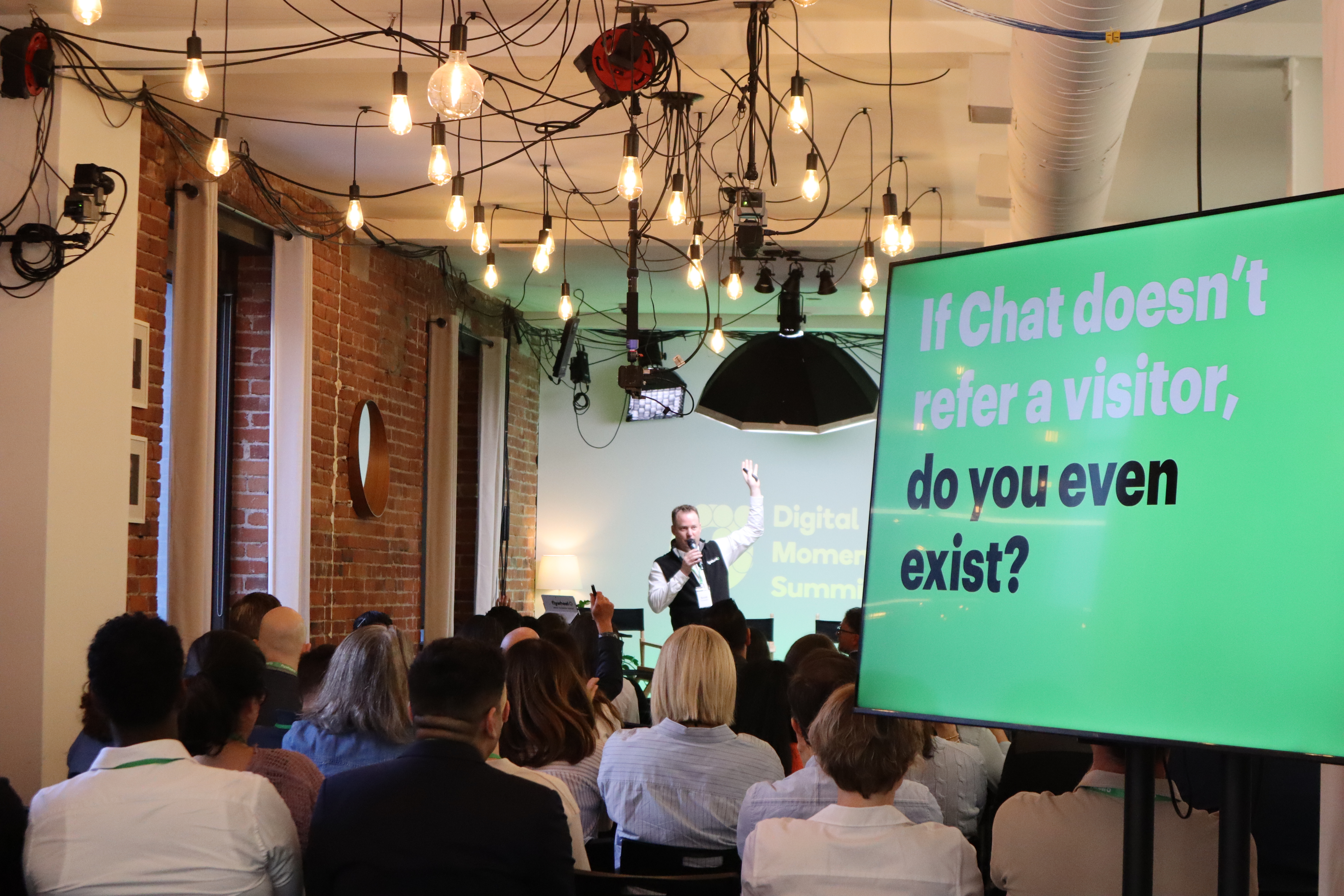
The emergence of generative engine optimization (GEO) has added another dimension to the conversation about digital discoverability.
But how much of your organization's strategic attention should be directed towards being found in AI-generated answers?
There is an important distinction between brand awareness, discoverability and relevance, along with the importance of evaluating SEO and GEO investments in the context of your broader business objectives.
Encouragingly, many of the fundamentals of effective digital communication remain remarkably relevant. Understanding your audience, creating meaningful content and designing experiences around user intentions provide a strong foundation for navigating changes in how people discover and engage with brands.
“The most exciting thing about AI and the technologies that we're deploying right now is that we get to go back to basics.”
Building confidence through digital maturity
AI has become mainstream in terms of strategic attention, although our research suggests that organizational maturity is still catching up.
Many businesses remain in the early stages of experimentation, running pilots and exploring relatively contained applications.
At Flywheel, we see considerable value in developing a maturity roadmap that allows organizations to progressively introduce more sophisticated capabilities as their teams gain experience and confidence.
Starting with a well-defined use case, grounded in your organization's own information and business objectives, can establish a foundation for more ambitious initiatives.
Continuing the conversation
The pace of technological change makes this an especially interesting time to revisit some of the fundamentals of digital strategy. Clear business objectives, effective team dynamics and a genuine understanding of the people we're designing experiences for will continue to shape the success of our technology investments.
If you're exploring how to build sustainable digital momentum within your own organization, we'd love to continue the conversation.